

If you’re watching a parent or spouse struggle to remember when to take their medications, you’re not alone. Missed doses, confused schedules, and skipped pills are common challenges. Medication reminders and daily living assistance can help create a system that supports your loved one in managing their medications while helping them live independently at home.
Medication reminders work by establishing consistent routines around medication timing. When combined with daily living assistance, they become part of a broader support system that helps your loved one maintain their daily structure and medication schedule.
What Medication Reminders Actually Do
A medication reminder is a prompt that tells your loved one it’s time to take their pills. The key benefit is consistency in timing and routine.
When someone takes the same medication at the same time every day, they establish a predictable pattern. One missed dose may have minimal impact, but multiple missed doses in a week can affect adherence to their medication schedule.
Medication reminders solve this by removing the guesswork. Instead of your loved one having to remember which pills go with which meal, or whether they already took the morning dose, someone or something tells them it’s time. They know what to take, when to take it, and can check it off as done.
The best reminders also track whether the medication was actually taken. This dose tracking gives you and their doctor real information about adherence patterns.
How Daily Living Assistance Connects to Medication Management
Medication reminders work better when they’re part of a broader daily routine.
Think about your loved one’s day. They wake up, maybe have breakfast, take their morning pills, get dressed, go about their activities. But what if they forget to eat? Skip breakfast? Get distracted by a TV show or a visitor? Suddenly the medication routine may be disrupted because the routine around it isn’t solid.
That’s where daily living assistance helps. When someone is present and engaged, medication reminders feel more like a natural part of the day.
Plus, if your loved one has trouble opening pill bottles, remembering which medication is which, or managing prescription refills, a caregiver trained in medication coordination can handle those details. You’re not asking them to be a nurse. You’re asking them to be an extra set of hands and eyes that keep everything running smoothly.
The Tools and Systems That Make It Work
Medication reminders don’t have to be high-tech. They can be as simple as a checklist on the fridge, a weekly pill organizer that separates doses by day and time, or a notebook where your loved one writes down each dose they take.
But simple systems only work if your loved one remembers to use them. That’s why many caregivers layer in a few backup options:
- Digital reminders: Apps or phone alarms that buzz at medication time
- Physical organization: A pill organizer pre-loaded for the week so there’s no confusion about which medication goes where
- Health diary: A simple log where your loved one or their caregiver records when medications were taken and any observations
- Prescription tracking: Knowing when refills are due so you’re never caught without medication
The goal is redundancy. Your loved one should have multiple ways to remember, not just one. If they miss the alarm, they see the pill organizer. If they forget to check the organizer, their caregiver reminds them during their visit.
Why Consistent Medication Adherence Matters
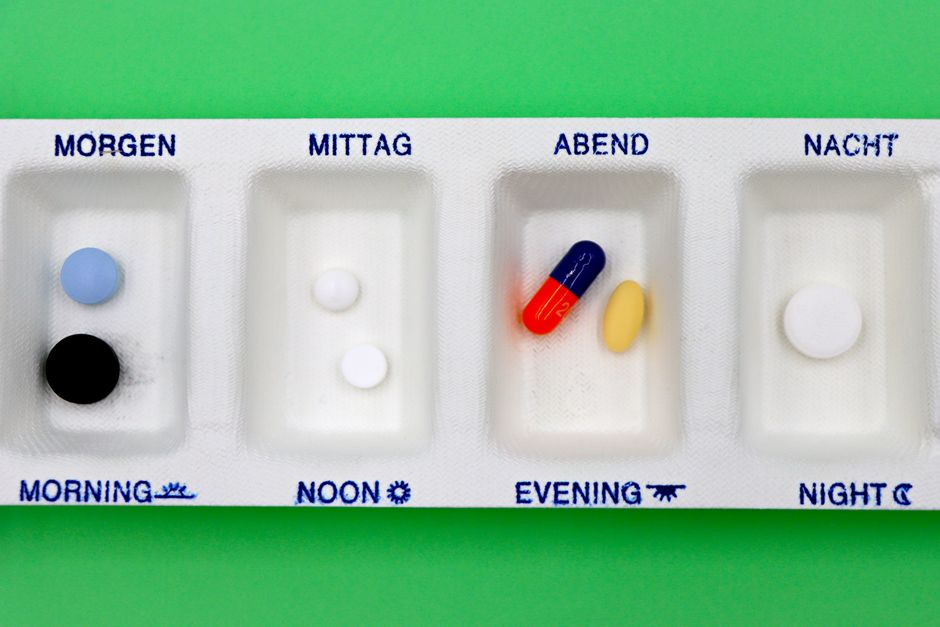
Consistent adherence to prescribed medication schedules is important for maintaining your loved one’s health plan as directed by their healthcare provider. Skipped or missed doses can affect how medications work as prescribed.
Consistent medication adherence supports your loved one in following their doctor’s treatment plan. Your loved one may feel better, have more energy for activities, and maintain greater independence. Adherence also helps reduce the likelihood of hospitalizations and supports your loved one’s ability to stay at home safely.
If you’re looking to set up a system that works for your loved one’s needs, Help Inc. can help you think through what support options are available.
Building a Medication and Daily Living Plan That Sticks
Here’s how to start:
Step 1: Get the full list. Write down every medication your loved one takes, when they take it, any special instructions (with food, without food, timing between doses), and when refills are due. Ask their doctor or pharmacist to clarify anything confusing. This is your baseline.
Step 2: Choose your reminder method. Will you use an app? A pill organizer? A caregiver visit? Most people use a combination. What matters is that your loved one will actually use it.
Step 3: Test it for a week. Does it work with their real life? Are they remembering to take their medications? Are reminders going off at times that make sense? Adjust anything that doesn’t fit.
Step 4: Add a tracking system. A simple checklist, a health diary, or even just marking a calendar when doses are taken. You need to know what’s actually happening.
Step 5: Link it to daily routines. Medication taken with breakfast? Build medication time into breakfast prep. Pills after dinner? Make it part of the evening routine. The more medication timing connects to something already happening in their day, the more automatic it becomes.
When to Bring in Professional Help
Some medication situations are straightforward. Others get more complex.
If your loved one takes multiple medications, if they have cognitive changes that make remembering harder, if they live alone and have no one checking in, or if they’ve already experienced missed doses—that’s when professional daily living assistance may be helpful.
A trained caregiver can support medication management by helping organize medications, coordinate with their doctor, and build a daily routine that supports their schedule. They can also handle prescription refills, transportation to the pharmacy, and coordination that keeps a medication plan on track.
When you’re ready to explore what professional support looks like, Help Inc. offers daily living assistance that includes medication coordination and routine support for seniors in your area.
Related: Home Care for Seniors Living Alone: A Complete Guide
Related: Aging in Place Home Assistance: A Complete Guide for Families
Related: Post-Surgery Home Recovery Assistance: A Complete Guide
Staying Safe and Maintaining Independence

The whole point of medication reminders and daily living assistance is to support your loved one in staying as independent and safe as possible, for as long as possible.
When medications are taken on schedule, your loved one can participate more fully in activities they enjoy. When daily routines are solid, they’re safer at home and better able to maintain their independence. Independence and safety work together.
The best systems are the ones your loved one participates in and understands. If they feel supported and kept in the loop, they’re more likely to cooperate. That’s the difference between a system that works on paper and one that actually supports their life.
What’s the easiest way to set up medication reminders at home?
Start with a physical pill organizer from any drugstore, labeled by day and time. Fill it once a week (or have a pharmacist do it). Set a phone alarm for medication times. Write down what you’ve done. You don’t need an app or a caregiver to start. You just need consistency. Once you see what works and what doesn’t, you can add more layers.
Can a caregiver manage medications for my loved one?
A caregiver can remind your loved one to take medications, help them organize pills, track doses, coordinate prescription refills, and observe their routine. What they can’t do is give injections or perform medical tasks that require nursing skills. If your loved one needs medical-level care, you’ll need a different type of professional. But for reminders, organization, and daily support? That’s exactly what a caregiver does.
How do I know if medication reminders are actually working?
Track it. Ask your loved one or their caregiver to mark down when doses are taken. Check the pill organizer count at the end of the week to see if pills are gone. Ask their doctor about any follow-up assessments or monitoring that would indicate whether the medication schedule is being followed as prescribed. Real data beats guessing.
What if my loved one refuses to take reminders seriously?
Resistance often means the reminder system doesn’t fit their life, or they don’t understand the importance of their medication schedule. Have a conversation about what they’re worried about. Is it concerns about their medications? Too many pills? Feeling like they’re losing control? Once you know what’s really going on, you can address it. Sometimes a caregiver or trusted family member explaining things differently helps. Sometimes the doctor needs to discuss the medication plan. But addressing the resistance early usually helps prevent problems later.


